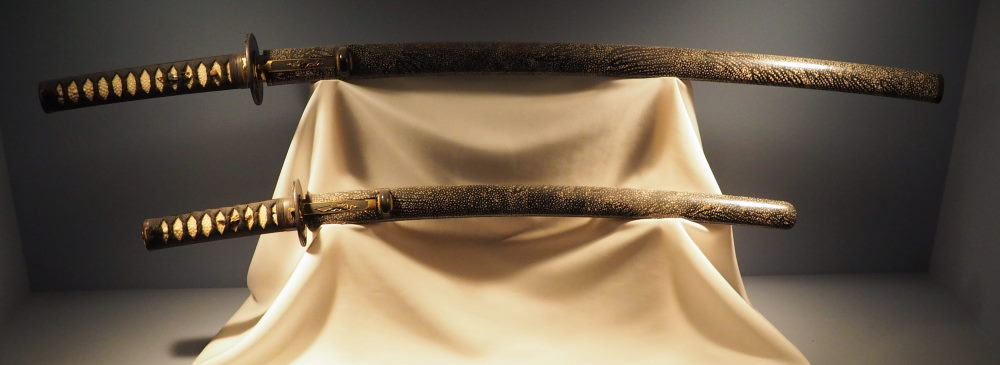
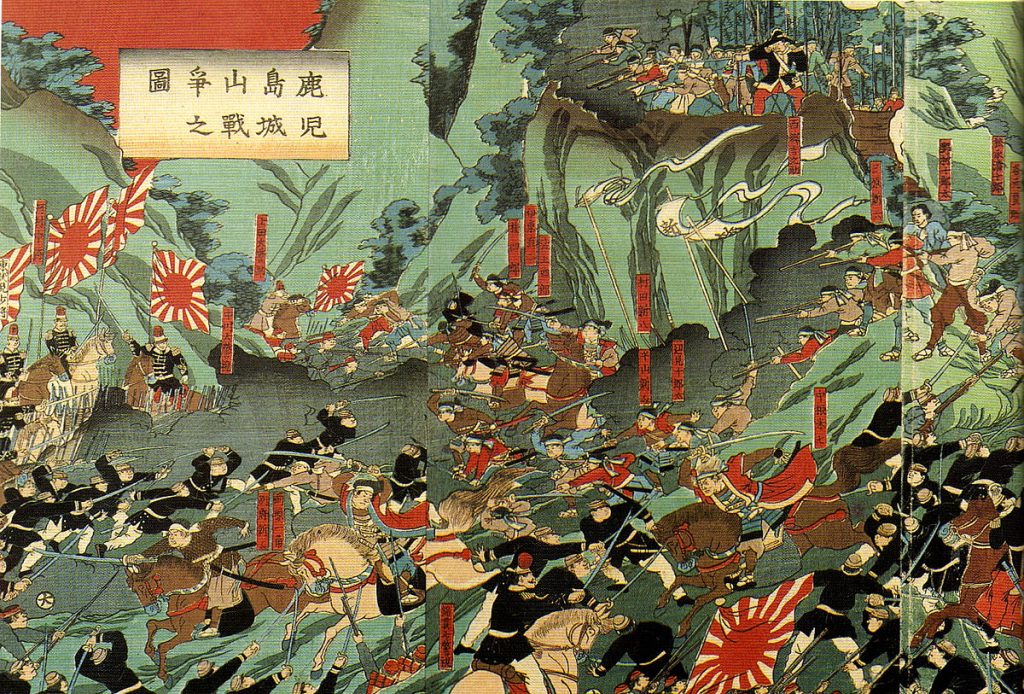
Nowadays, it has become fashionable to practice various sports and martial arts for health, mind training and recreational purposes. Many of them have their roots in Japan and during their development, they were mainly used for war purposes. Around the 16th century, the term was coined budō (武道), consisting of two words: bu (武 – martial, military) and dō (道 – path, road), literally meaning "the way of fighting" or "the art of war". The terms were also used interchangeably with it at that time bujutsu (武術 – technique, martial art) and bugey (武芸 – training the mind and body by practicing martial arts).
The establishment of traditional martial arts schools in Japan
With the need to train new warriors (samurai) to defend individual provinces of Japan, numerous martial arts schools were created. Each of these schools then represented its own interests (often even competing with others and keeping its techniques secret) and mainly focused on one or several of its chosen forms of fighting. The techniques taught during this period (before 1868) are called koryū-bujutsu (古流武術 – old-style martial arts), and the schools that spread them include, among others: : Kashima-shinryū, Musō Shinden-ryū, Niten'ichi-ryū, Shintō Musō-ryū Jōjutsu, Tenshin Shōden Katori Shintō-ryū and many others.
Niten'ichi-ryū
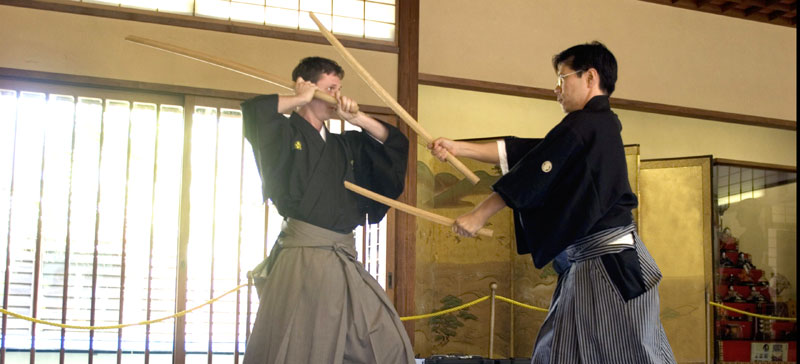
Niten'ichi-ryū was created in the 17th century by the legendary warrior Miyamoto Musashi. The name of the school literally means "school of tactics of two heavens as one" as its main teaching element is fighting with two swords. Currently in The school program includes: sword fighting (volachi seiho), short sword fighting (kodachi seiho), fighting with two swords (nito seiho), stick fighting (baboutjutsu), knife defense (andikuchi roppo) and defense against the sword (jitte is a jutsu). Training takes place in pairs using wooden weapons.
Kashima-shinryū

Kashima-shinryū was founded in the 15th century by Kunii Genpachirō Kagetsugu and Matsumoto Bizen-no-kami. Her curriculum included: sword fencing (kenjutsu), the art of drawing a sword (iaijutsu), stick fighting (baboutjutsu), unarmed fighting (jujitsu), sickle fighting (Kamajutsu) and several other teachings required in traditional samurai education. After the Kunii Zen reform, the school limited itself to teaching swordsmanship.
The main element of teaching is philosophy ichi-no-tachi, which literally means "first the sword" and manifests itself in paying special attention to the adepts adopting the correct postures. The basis of training is five sets of kata that make up kumitachi. The first kata is performed using a wooden rucho sword equipped with a thick guard (tsuba), and the rest with a bamboo sword (shinai) additionally covered with leather (fukuro-shinai). This ensures the safety of exercisers.
Musō Shinden-ryū

A fighting style whose creator is Hayashizaki Jinsuke Shinegobu. In the 18th century, the original Hayashizaki school split into two branches: Shinomura and Tanimura. The sixteenth sokei of the Shinamura branch was Hakudō Nakayama, and it was he who in the 20th century began to use the name Musō Shinden Ryū Batto-Jutsu in relation to the techniques he taught. Sensei Nakayama made a thorough review of the techniques and divided the forms depending on the advancement of the trainees (shoden, skinny, window).
Currently in The school curriculum includes only the art of drawing a sword (iaijustu). A characteristic feature of this school is the use of silent shouts (kiai), rear cuts back over the left shoulder (furikaburi) and the horizontal position of sheathing the sword (nhere). Trainings are performed without a partner using training swords made of aluminum or steel.
Shintō Musō-ryū Jōjutsu
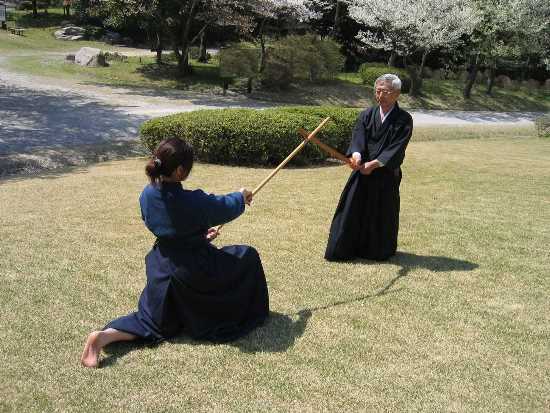
This school was founded in the 17th century. Her father was Musō Gonnosuke - a samurai who, after losing a duel with Miyamoto Musashi, having undergone meditation in isolation from the world, developed fighting techniques using a short stick (jabout). These techniques made it possible Gonnosuke to win (or draw, as some sources say) the next fight against his previous winner. From then on, his short stick fighting techniques (jōjutsu) became famous and spread to many different daboutjō throughout Japan.
Nowadays, there are many different schools and teaching organizations jōjutsu together with other techniques (including aikijutsu). In most schools, Mrthe beginnings of practice begin with learning 12 basic techniques (kihon), followed by learning individual forms of kata. Kata are practiced in pairs, with all strikes stopped a few centimeters from the body to maintain the safety of the training.
Tenshin Shōden Katori Shintō-ryū

Katori Shintō-ryū was initiated in the 15th century by Iizas Chōisai Iga-no-kami Ienao. It is one of the oldest Japanese classical and comprehensive war schools (sōgō bujutsu). Legend has it that Chōisai, an outstanding swordsman in the service of the Chiba family, settled near the Katori temple after the fall of the clan. There, after training continuously for 1,000 days, he collapsed from exhaustion and while he was sleeping, a deity appeared to him and gave him a scroll. mokuroku heiho no shinsho, containing descriptions of all techniques and kata. The name of the school Tenshin Shōden Katori Shintō-ryū comes from this wonderful dream, which loosely translates as "The way of the deity of the Katori temple in accordance with divine truth."
Currently, the school's program includes: sword fencing (kenjutsu), the art of drawing a sword (iaijutsu), stick fighting (bōjutsu), glaive fighting (naginatajutsu), short sword fighting (kodachijutsu), fighting with two swords (ryōtōjutsu), spear fighting (sojutsu), unarmed fighting (jūjutsu), throwing sharp objects (shurikenjutsu) and oral traditions regarding techniques for creating fortifications, strategy and tactics, defense against ninja, astronomical and geographical knowledge, as well as cosmology and mysticism. Kata are practiced in pairs, using wooden weapons (except iaijutsu), with all blows stopped a few centimeters from the body to maintain the safety of the training.
The creation of modern martial arts schools
The nearly 250-year period under the military rule of the Tokugawa family, known as the Edo period, led to many changes in Japanese society. The policy of isolation ensured internal peace and the development of bourgeois culture, but economically it left Japan far behind the West. The Japanese found this out when ships from "overseas powers" arrived and demanded that their country be opened to trade and cooperation.
The signing of the imposed Treaty of Kanagawa in 1854 dramatically increased anti-government sentiment. Numerous groups of patriotic samurai began to openly criticize the shogun, blaming him for his weakness and inability to resist foreigners from Europe and the United States. In 1868 as a result of the civil war that had been going on since 1867 boshin, events called the "Meiji Restoration" took place. Samurai from the western feudal domains of Satsuma, Chōshū, Tosa, and Hizen overthrew the Tokugawa shogunate, forcing the last of them to resign from office.
Power was transferred to the hands of the young Emperor Mutsuhito, who on April 6, 1868 issued a declaration called the Imperial Oath in Five Articles, announcing deep internal reforms. From that moment on, all newly created martial arts are called gendai-budō (現代武道 – modern martial arts). These include, among others: aikidō, karate, kendō, kyūdō, iaidō, judō, jūkendō, naginata-dō and shōrinji kenpo.
Aikido

Aikidō (合気道 – way of the unified spirit) was developed in the 20th century by ō-sensei Morihei Ueshiba. Ueshiba Sensei When creating subsequent techniques, he relied on his experiences from the Daitō-ryū school and the martial art of using the yari spear, a short jō stick and sword fencing. He developed his martial art for most of his life. He taught it under the name in the 1920s and 1930s aiki bujutsu ("aiki martial art") and then aiki budō ("the way of fighting aiki"). In 1944, he first used the name aikidō to describe it.
Currently aikido is a martial art consisting primarily of self-defense. The techniques consist mainly of throws and levers (mainly on small joints, i.e. wrists and elbows) as well as dodges and pads (ukemi). In addition to hand-to-hand combat, aikido also includes elements of weapon combat. They are used for training purposes bokken, jō and tanō. The training involves performing a technique on both sides, which involves entering and receiving an attack.
Karate
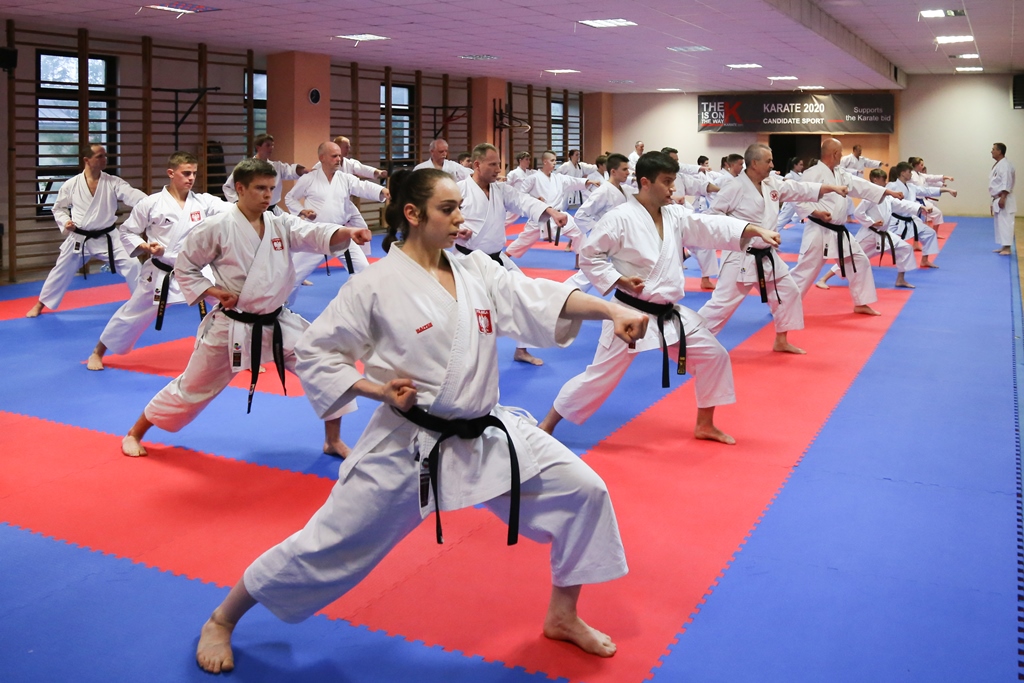
Karate (空手道 - the way of empty hands) is a martial art from Okinawa, whose roots come from Japanese kempo (Shorinji Kempo school) and Chinese boxing (Nahate school).). Gichin Funakoshi is considered its father, who popularized this form of fighting all over the world. Karate bases all its techniques on direct combat with the opponent without the use of weapons. Initially, trainees are taught the basics (kihon), and over time move on to performing a sequence of movements (kata) in pairs and finally to fight (kumite), which consolidates and tests previously acquired knowledge. Nowadays, karate is seen more as a spot discipline in which competitions are held.
Kendo
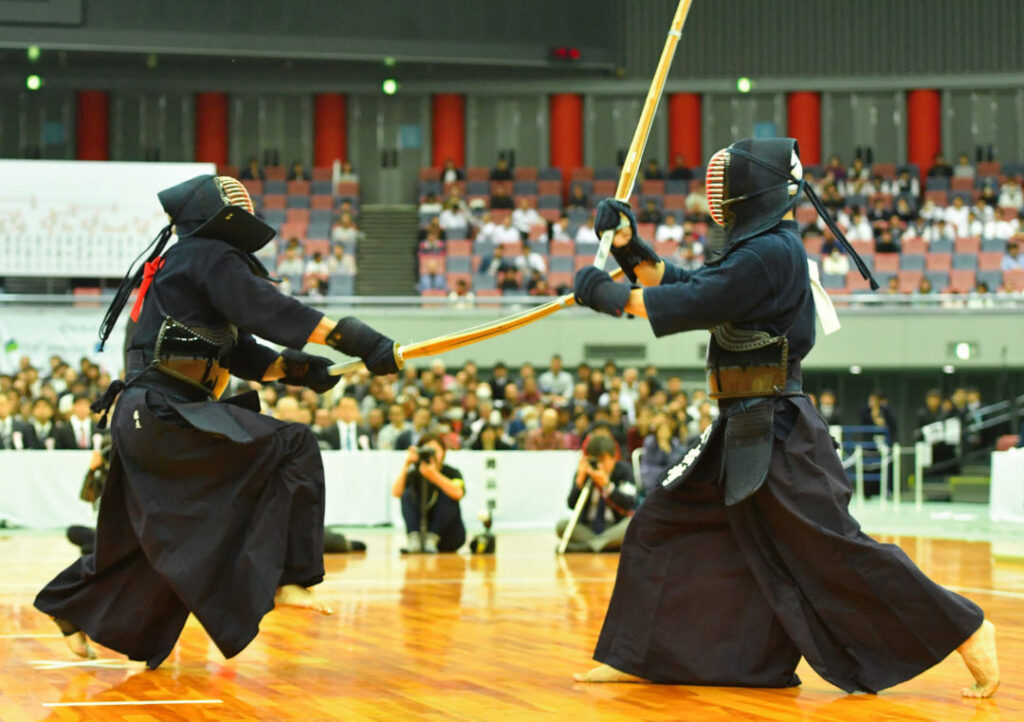
Kendō (剣道 – the way of the sword) is a Japanese swordsmanship based on samurai fighting techniques (kenjutsu). Nowadays, bamboo swords are used in sports duels (shinai), which replaced sharp steel weapons. Both training and competitions take place in special protective clothing (baboutgu), created after the original samurai armor (yoroi). During the competition, regulations are followed, strictly defining the area of permissible blows (head, larynx, forearms, body).
During the fight, three judges constantly observe the fight. After one of the combatants delivers a correct blow, supported by a strong shout (kiai) and a decisive lunge (fumi komi), the judges raise one of the flags showing the player who hit first and receives a point. The hit itself, without a correctly performed technique, may not be recognized at all. Therefore, inclendo during training, great emphasis is placed on precision and the execution of each cut as a whole.
Kyūdō
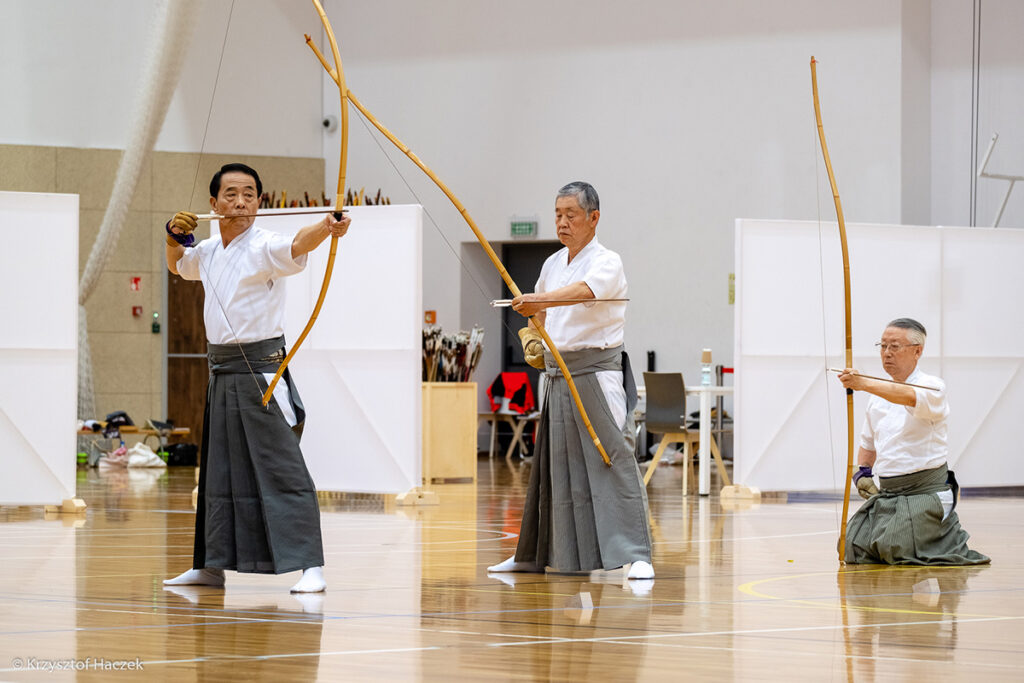
Kyūdō (弓道 – way of the bow) i.e. the traditional form of using a long bow (Yumi), modeled on the practices of Japanese samurai. It is the art of accuracy, balance and control, strongly related to the values of Zen philosophy. This discipline is treated mainly as a method of spiritual and moral training. The beginning of the journey begins with learning ceremonial movement (kihon tai), drawing the bow correctly and shooting from a close distance to a straw target (makiwara). With further development, you practice shooting at a target at a greater distance and proper control of your breathing and the entire body. Shooting at a target itself is not based on the archer's skill, but on working on the body and mind as a whole.
Iaido
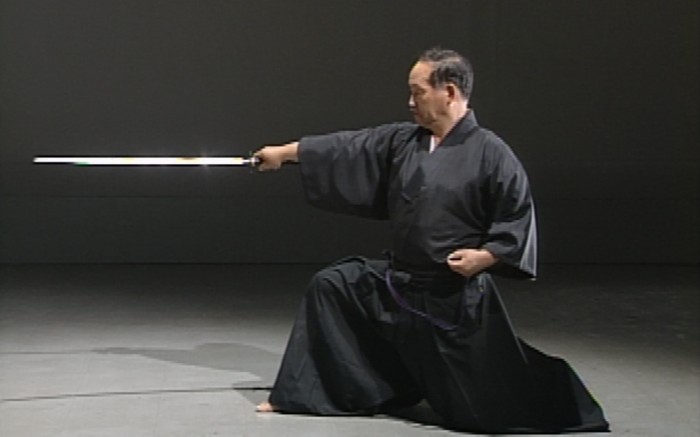
Iaidō (居合道 – way of right being) is a style of drawing a sword, the origins of which can be seen in the art of drawing a sword (iaijutsu) started by Hayashizaki Jinsuke Shigenobu about 400 years ago. Compared to other sword fighting schools, iaidō focuses mainly on defense against surprise attacks. The techniques taught not only allow for a quick reaction to an attack (by perceiving the attacker's movements), but also enable full mental control over the attack situation (zanshin) and control over the aggressor without killing him.
Training takes place individually, using steel or aluminum training swords. Adepts repeat the kata many times, learning the appropriate reaction and the accuracy of cuts and movements. Additionally, every year there are championships in which competitors perform in pairs layouts. These routines are judged by three judges on a basis visual values as well as the "spirit" and precision of the presented techniques.
Judō
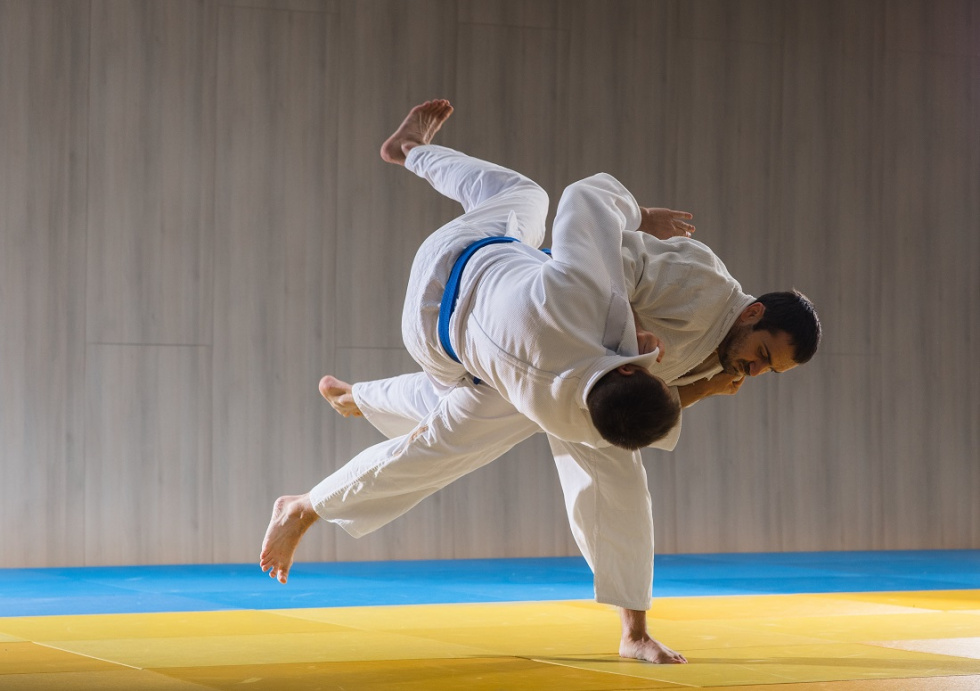
Judō (柔道 – way of giving way) was founded by Jigorō Kanō and comes from the self-defense art called jū-jutsu, which was developed in the Edo period. Ju techniquesdō are based on throws (nage-vase), holds (katame-vase) and impacts (atemi-vase). The latter are only available in the traditional version Yupdō, because sports associations do not allow their use in competitions. The philosophy of this martial art is based mainly on using the opponent's momentum and force against himself. Therefore, softness and compliance are the most important here.
Trainings are performed in pairs. At the beginning, trainees learn the correct pads that will allow them to safely handle throws. Only after mastering this skill can you move on to learning holds and throwing with a partner. During training in the advanced group, there are also sparring sessions, which allow you to check all the learned material in practice. Judō training develops strength, form and sense of balance. It teaches strategy and fighting in direct contact with a resistant opponent.
Jūkendo

Jūkendō (銃剣道 - way of the firearm blade) is a modern martial art similar to kendō, but based on the use of firearms with a blade. It was created based on the French bayonet fighting systems and the Japanese spear fighting art (sojutsu). Training takes place similarly to kendo - in plastic protectors - and fighting uses a wooden, blunt-ended replica of a shotgun (mokujū). Exercises are done in pairs by performing individual kata. The techniques are aimed at blows to the heart, larynx and left lower part of the opponent's body.
Naginata-do

Naginata-dō (薙刀道 - the way of the naginata) dates back to the 9th century, when glaives (naginata) were first used and appreciated mainly as a weapon extremely effective against cavalry. Later, when firearms began to be used in battles, they were used by guards, women (to defend their homes) and warrior monks. Naginata-dō techniques include: cutting, thrusting, blocking and parrying blows, and covers. An important feature of this martial art is symmetry. Trainers perform exercises on both sides of the body, which greatly improves their sense of balance.
Training takes place in pairs by performing individual kata. For exercises, naginatas made of bamboo are used, secured at the ends with leather caps. IN naginata-dō shows also take place (engi) and tournaments (shiai). During the shows, the correct execution of the kata of the entire team is assessed. Tournaments are similar to kendabout – where two players stand opposite each other wearing plastic protectors and try to score a point by hitting one of the allowed body parts (head, throat, body, wrists and shins) of your opponent.
Shōrinji Kenpō
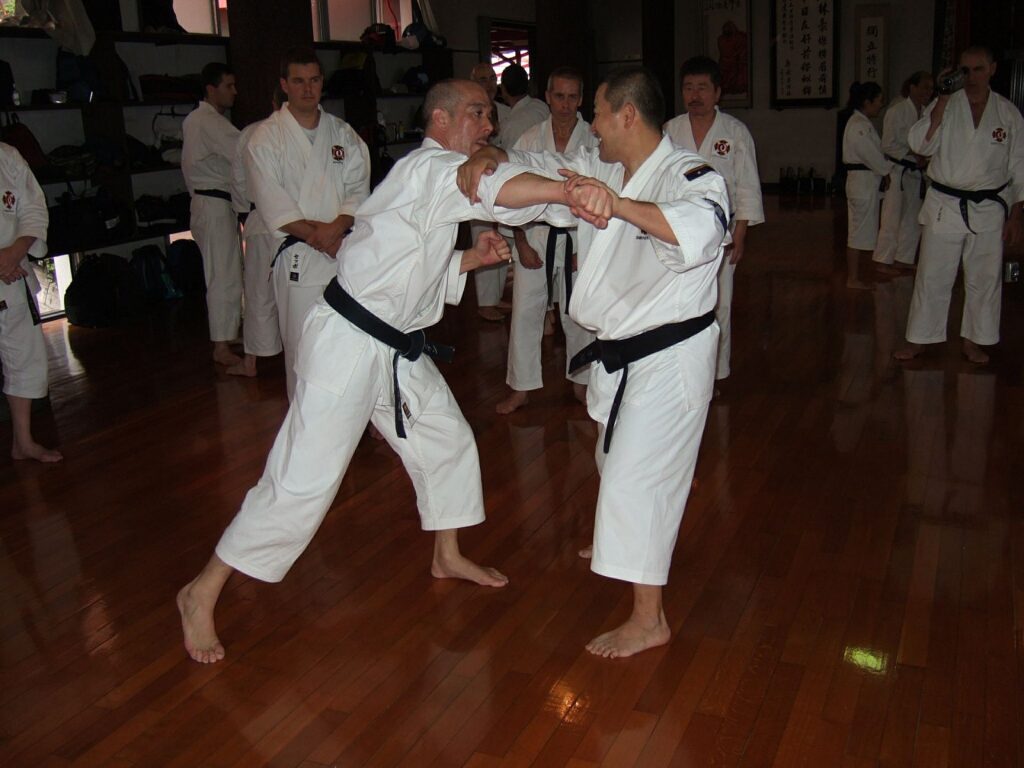
Shōrinji Kenpō (少林寺拳法 – fist method of the Shaolin Monastery) was founded in 1947 By Dōshin Sō (Michiomi Nakano). He created his system based on fighting techniques from the Shaolin monastery, Japanese jujutsu and techniques based on aiki-jūjutsu of the Daitō-ryū schools. The teaching consists of three elements: the art of self-defense, mind training and healing techniques.
Self-defense techniques training (hockey) is implemented through choreographic sequences called embu, which resemble kata forms in other Japanese martial arts. Each embu consists of 6 parts, in which a series of soft (jūhō) and hard (gōhō) technician During training in pairs (kumi embu), one of the participants is always the attacking side and the other the defending side. After completing the entire sequence, their roles change. There are no competitions or other forms of sports competition in this art.
The way of the warrior is the beginning
Today's warriors have a lot to choose from when it comes to the wealth and availability of various forms and schools of combat. We are in times of peace and we no longer train for war. By maintaining ancient traditions, we not only do not allow ourselves to forget the spirit of budō, but also by training ourselves every day, we overcome our inner selves in order to be better and better people every day who know and appreciate the value of human life. Because the warrior's path, once begun, never ends...