


To this day, the following techniques have survived in the curriculum: kenjutsu, bōjutsu, naginatajutsu, iaijutsu, tachiai, battojutsu, sojutsu, kodachijutsu and ryōtōjutsu. However, in addition to the above-mentioned areas, some masters also teach other techniques. Master Sugino Yukihiro also teaches his students techniques jūjutsu and shurikenjutsu, whereas Shihan Ōtake Risuke additionally conveys oral knowledge of the art ninjutsu, about the strategy of building fortifications or about magical arts, which in fact combined elements of cosmology and mysticism. Below is the full programme Katori Shinto-ryu with name translations.
Table of contents
Tachijutsu (太刀術).
Sword handling techniques
Kenjutsu (剣術).
Long sword fighting techniques

| Name | Record | Translation |
|---|---|---|
| OMOTE NO TACHI | 表之太刀 | the base of the sword |
| - Itsutsu no tachi | 五津之太刀 | five sword techniques |
| - Nanatsu no tachi | 七津之太刀 | seven techniques of the sword |
| - Kasumi no tachi | 神集之太刀 | sword of gathered kami deities |
| - Hakka no tachi | 八神之太刀 | sword of eight kami deities |
| GOGYŌ NO TACHI | 五行之太刀 | five teachings on the sword |
| - Mittsu no tachi | 三津之太刀 | three sword techniques |
| - Yottsu no tachi | 四津之太刀 | four sword techniques |
| - In no tachi | 陰之太刀 | shadow sword |
| - Sha no tachi | 捨之太刀 | discarded sword |
| - Hatsu no tachi | 發之太刀 | starting sword |
| GOKUI SHICHIJŌ NO TACHI | 極意七条之太刀 | the essence of the seven articles about the sword |
| - Tōyama no tachi (ukifune no kurai) | 遠山之太刀 (浮船之位) | the sword of a distant mountain (drifting boat position) |
| - Katanami no tachi (yosui no kurai) | 片浪之太刀 (葉水之位) | partial wave sword (water leaf position) |
| - Agenami no tachi (sangetsu no kurai) | 揚波之太刀 (山月之位) | rising tide sword (moon's position above the mountain) |
Iaijutsu (居合術).
Techniques for quick sword retrieval

| Name | Record | Translation |
|---|---|---|
| OMOTE NO IAI | 表之居合 | iai basics |
| - Kusanagi no ken | 草薙之剣 | grass-cutter sword |
| - Nukitsuke no ken | 抜附之剣 | drawn and stabbing sword |
| - Nukiuchi no ken | 抜討之剣 | drawn and cutting sword |
| - uken | 右剣 | right sword[cutting] |
| - Saken | 左剣 | left sword[cuts] |
| - Happōken | 八方剣 | sword in eight directions / sword of eight directions |
| TACHIAI NO BATTŌJUTSU | 立会之抜刀術 | technique of quickly drawing the sword in a standing position |
| - Yukiai gyakunuki no tachi | 行合逆抜之太刀 | meeting [the enemy], oppositely drawn sword |
| - Zengo chidori no tachi | 前後千鳥之太刀 | front and back plover sword |
| - Yukiai migi chidori no tachi | 行合右千鳥之太刀 | the sword of a plover encountering [the enemy] on the right |
| - Gyakunuki no tachi | 逆抜之太刀 | opposite draw of the sword |
| - Nukiuchi no tachi | 抜 討之太刀. | drawn and cutting sword |
| GOKUI NO IAI | 極意之居合 | the essence of iai |
| - Kumokiri no ken | 雲切之剣 | cloud cutting sword |
| - Hangetsu no ken | 半月之剣 | crescent sword |
| - Seigan no ken | 清眼之剣 | sword of pure sight/sword of clear sight/eye |
| - Muitsu no ken | 無一之剣 | the first sword of nothingness |
| - Muni no ken | 無二之剣 | second sword of nothingness |
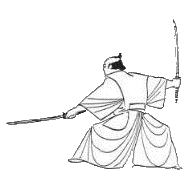
Ryōtōjutsu (両刀術).
Techniques of fighting with two swords
| Name | Record | Translation |
|---|---|---|
| RYŌTŌ | 両刀 | two swords |
| - Eigetsu no tachi (niō no kurai) | 永月之太刀 (二王之位) | Eternal Moon Sword (two kings position) |
| - Suigetsu no tachi (tenchi no kurai) | 水月之太刀 (天地之位) | sword of the moon reflected in the water (position of heaven and earth position of the whole universe) |
| - Isonami no tachi (fuha no kurai) | 磯浪之太刀 (風葉之位) | sword of the coastal wave / sword of the wave hitting the shore (position of leaves in the wind) |
| - Murakumo no tachi (su no kurai) | 村雲之太刀 (佐寿之位) | sword of clouds above the village / sword of the clouded village (life-saving position) |
Kodachijutsu (小太刀術).
Kodachi short sword fighting techniques

| Name | Record | Translation |
|---|---|---|
| GOKUI NO KODACHI | 極意之小太刀 | the essence of kodachi |
| - Hangetsu no kodachi | 半月之小太刀 | half moon kodachi |
| - Suigetsu no kodachi | 水月之小太刀 | Kodachi of the moon reflected in the water |
| - Seigan no kodachi | 水月之小太刀 | the kodachi of clear vision |
Bōjutsu (棒術).
Techniques for using the bō stick

| Name | Record | Translation |
|---|---|---|
| OMOTE NO BŌ | 表之棒 | the base of the bō stick |
| - Seriai no bō | 迫合之棒 | get acquainted with bō |
| - Sune-hishigi no bō | 臑挫之棒 | bō crushing knees |
| - Sayū no bō | 左右之棒 | bō right and left |
| - Kasa-hazushi no bō | 笠研乏棒 | bō removing headgear |
| - Hane-tsuru-be no bō | 刎釣瓶之棒 | bō carrying water cans |
| - Tachinami no bō | 立浪之棒 | bō rising tide |
| GOKUI NO BŌ | 極意之棒 | the essence of the bō stick |
| - Gedan no kamae no bō | 下段構之棒 | bō low position |
| - Kasumigake no bō | 霞掛之棒 | bō covered with mist |
| - Denko kamae no bō | 電光構之棒 | bō lightning position |
| - In no kamae no bō | 陰構之棒 | bō shadow position |
| - Hikizue no kamae no bō | 引杖構之棒 | bō cane pulling position |
| - Tatsue kamae no bō | 立杖構之棒 | bō standing cane position |
Naginatajutsu (薙刀術).
Halberd fighting techniques

| Name | Record | Translation |
|---|---|---|
| OMOTE NO NAGINATA | 表之薙刀 | the basics of the naginata |
| - Itsutsu no naginata | 五津之長刀 | five naginata techniques |
| - Nanatsu no naginata | 七津之長刀 | seven naginata techniques |
| - Kasumi no naginata | 霞之長刀 | misty naginata |
| - Hakka no naginata | 八箇之長刀 | eight naginata techniques |
| GOKUI SHICHIJŌ NO NAGINATA | 極意七條之薙刀 | the essence of the seven articles on naginata |
| - Embi no naginata | 燕飛之長刀 | naginata of a flying swallow |
| - Tombo no naginata | 蜻蛉之長刀 | dragonfly naginata |
| - Yoko no naginata | 龍虎之長刀 | dragon and tiger naginata |
Sōjutsu (槍術).
Spear fighting techniques

| Name | Record | Translation |
|---|---|---|
| OMOTE NO YARI | 表之槍 | spear bases |
| - Hiryū no yari | 飛龍之槍 | flying dragon spear |
| - Koryū no yari | 去龍之槍 | spear of the passing dragon / spear of the dead dragon |
| - Tsukidome no yari | 突留之槍 | stab-stopping spear |
| - An'ya no yari | 揚矢之槍 | the spear of the ascending arrow |
| - Denko no yari | 電光之槍 | lightning spear / thunder spear |
| - Yoru no ya yari | 夜之矢槍 | night arrow spear |
| HIDEN NO YARI | 秘伝之鎗 | secret spear techniques |
| - Jōdan no yariai | 上段之鎗合 | rising spear |
| - Gedan no yariai | 下段之鎗合 | falling spear |
Shurikenjutsu (手裏剣術).
Techniques for throwing small objects

| Name | Record | Translation |
|---|---|---|
| OMOTE NO SHURIKEN | 表之手裏剣 | basics of using shurikens |
| - Seven forms of kata | ||
| GOGYŌ NO SHURIKEN | 五行之手裏剣 | five shuriken teachings |
| - Eight forms of kata | ||
| GOKUI NO SHURIKEN | 極意之手裏剣 | the essence of using shurikens |
| - Nine forms of kata | ||
| OKUDEN | 口伝 | oral transmission |
Jūjutsu (柔術).
Hand-to-hand combat techniques

| Name | Record | Translation |
|---|---|---|
| GOKUI NO JŪJUTSU | 極意之柔術 | the essence of hand-to-hand combat techniques |
| - Tsūken | 通拳 | following the fist |
| - Uchitori-te | 内取手 | gripping the hand from the inside |
| - Sotodori-te | 外取手 | grabbing the hand from the outside |
| - Konoha-gaeshi | 木葉返 | leaf reversal |
| - Musa-soku | 無左足 | left leg removed / left leg missing |
| - Kata-e-mon | 片衣紋 | grabbing one arm/shoulder |
| - Ryō-e-mon | 兩衣紋 | catching two arms/shoulders |
| - Koromo-shibori | 衣搾 | unscrewing the armor |
| - Kareki-ori | 枯木折 | breaking a dead tree |
| - Oni-osae | 鬼抑 | demon binding |
| - Tengū-gaeshi | 天狗返 | return / return / return tengū |
| - Yami-no-yo | 闇之夜 | night of darkness |
| - Sasudome | 佐壽留 | stab/stab stop |
| - Giboshu-gaeshi | 疑寶珠返 | |
| - Taki-toshi | 瀧落 | falling waterfall |
| - Hishiribiki | 七里引 | lead for seven lengths |
| - Sukatamisugatami | 姿見 | mirror |
| - Hagoromo-shibori | 羽衣搾 | wringing out the robes |
| - Yume-makura | 夢枕 | pillow of dreams |
| - Hiji-gane | 臂金 | iron elbow |
| - Enji-shibori / saruko-shibori | 猿子紋 | |
| - Toba-soto-ori | 鳥羽外折 | |
| - Shika-no-issoku | 鹿之一足 | one deer leg |
| - Yama-toshi | 山落 | falling mountain / falling mountain |
| - Sodeguruma | 袖車 | |
| - Taki-yoko-koe | 立横聲 | |
| - Dō-shibori | 胴搾 | twisting the torso |
| - Hiki-shibori | 引搾 | squeeze and jerk / jerk with twist |
| - Shōgi-daoshi-ori | 将棋倒折 | |
| - Saka-yubi | 逆指 | twisting fingers |
| - Kubi-shibori | 首搾 | choking / neck twisting |
| - Washi-no-ha-otoshi | 鷲之羽落 | |
| - Sora-muki-busei | 空向伏 | |
| - Kata-bane-osae | 片羽子抑 | |
| - Oniki-bina | 鬼木離 | |
| - Gozen-tori | 御膳取 |
Ninjutsu (忍術).
Defense techniques against attacks and the presence of ninjas

| Name | Record | Translation |
|---|---|---|
| OKUDEN | 口伝 | oral transmission |
Chikujōjutsu (築城術).
Knowledge of building fortifications

| Name | Record | Translation |
|---|---|---|
| OKUDEN | 口伝 | oral transmission |
Gunbai-heihō (軍配兵法).
Military strategic and tactical knowledge

| Name | Record | Translation |
|---|---|---|
| OKUDEN | 口伝 | oral transmission |
Tenmon-chirigaku (天文地理学).
Astronomical and geographical knowledge

| Name | Record | Translation |
|---|---|---|
| OKUDEN | 口伝 | oral transmission |
In'yō-kigaku (陰陽気学).
Secret knowledge, including cosmology and mysticism

| Name | Record | Translation |
|---|---|---|
| KUJI NO IN | 九字之印 | nine gestures |
| JŪJI NO HŌ | 十字之法 | ten character method |
| OKUDEN | 口伝 | oral transmission |
Bibliography
- 免許皆伝巻物 (scrolls menkyo kaiden)
- 横瀬知行、『日本の古武道』、日本武道館、東京、二〇〇一年
- "WAY OF THE WARRIOR - Way of the Samurai", production: BBC, 1983
- http://en.wikipedia.org/wiki/ Tenshin_Shōden_Katori_Shintō-ryū